Roulette Betting Systems Explorer — 32 Systems Compared
Every well-known roulette betting system in one filterable reference. Sort by risk level and progression type, read the mechanics in plain language, and watch each system play out on a simulated run — honest by design, because none of them changes the house edge.
Roulette Strategy Explorer
Every well-known roulette betting system in one place — filter, compare and watch each one play out. Honest by design: none of them changes the house edge.
All 32 systems at a glance
- Martingale
Double your stake after every loss so the first win recovers everything plus one unit. Simple, brutal, and capped hard by table limits and bankroll.
- Grand Martingale
Doubles after each loss and adds an extra unit on top, chasing a bigger recovery payday. Stakes explode even faster than the standard Martingale.
- Paroli
Double after wins, not losses: ride a hot streak for three wins, bank the lot, reset. Losing spins only ever cost one base unit.
- 1-3-2-6
A fixed staking pattern on winning streaks: 1, 3, 2, then 6 units. A completed cycle banks 12 units; any loss resets you to the start.
- 1-3-2-4
The cautious sibling of 1-3-2-6: the final bet is 4 units, so even losing the last spin of a cycle still leaves you 2 units up.
- D'Alembert
Add one unit after a loss, drop one after a win. A gentle pyramid that escalates far slower than the Martingale — and recovers far slower too.
- Reverse D'Alembert
Add a unit after each win, drop one after each loss. Rides streaks cheaply, but choppy win-loss-win sequences quietly bleed a unit per pair.
- Fibonacci
Stake along the Fibonacci sequence: one step forward per loss, two steps back per win. Each win repays the previous two losses — deep runs still get huge.
- Reverse Fibonacci
Climb the Fibonacci sequence on wins and fall back two steps on losses. Needs long winning streaks to work, and a late loss hands most of it back.
- Labouchère
Write a number line, stake the two ends, cross them off on a win and append the loss on a defeat. Elegant bookkeeping over the same old edge.
- Reverse Labouchère
The Labouchère flipped: append wins, cross off losses. Caps each losing cycle at the line total while letting winning streaks stake ever larger amounts.
- Oscar's Grind
Grind towards exactly one unit of profit per cycle: raise by one only after wins, never more than needed to finish the cycle one unit up.
- Hollandish
Bet in blocks of three spins at stakes 1, 3, 5, 7… — step up after a losing block, reset after a winning one. Slower burn, same destination.
- Whittaker
After a loss, stake the sum of your last two bets; after a win, step back two. Mathematically the Fibonacci progression under another name.
- Parlay
Let it ride: after a win, stake the original bet plus the winnings; after a loss or a completed run, reset. The casino's oldest press-your-luck pattern.
- Ascot
Write a ladder such as 1-2-3-5-8-13-20-30-50, start in the middle, move up a rung on a win and down a rung on a loss.
- Guetting
A four-tier staking ladder (2 / 3-4-6 / 8-12-16 / 20-30-40): promote after two wins at a stake, drop a rung after any loss. Complex, disciplined, edge unchanged.
- Flat Betting
The control group: the same stake every spin, no progression at all. The cheapest variance, the slowest expected loss, and the easiest bankroll to manage.
- All-In
One maximum-boldness bet with the whole bankroll. On a negative-expectation game, one big bet gives the house the fewest chances — then the game is over.
- Andrucci
Track around 30 spins, pick the "hot" number and bet it straight up for the next 30. Built entirely on the gambler's fallacy — modern wheels don't remember.
- James Bond
A fixed £200 spread: £140 on 19–36, £50 on the 13–18 six-line, £10 on zero. Covers 25 of 37 numbers; any of 1–12 loses the lot.
- Kavouras
An uneven 8-unit spread across 20 numbers — corner, six-line and five splits — so every hit nets a different amount. Chaotic on purpose.
- Romanosky
Eight units across two dozens and two corners cover 32 of 37 numbers. Wins one unit on 86.5% of spins — and loses eight when the gap hits.
- 666 Strategy
£660 spread over 33 numbers — red, six splits and three straights — to net £60 on almost every spin. Four uncovered numbers take the full £660.
- 3/2 System
Three units on red plus two on the middle column cover 26 numbers. Overlapping hits pay a pleasant spike; the 11 misses take the whole stake.
- 64% Two-Dozens
Equal stakes on two dozens cover 24 numbers, winning one unit on 64.9% of spins — the name is the win probability, not an edge.
- Five Quad
Five corner bets plus one straight-up number cover 21 of 37 numbers. Corners pay modestly; the single straight number is the lottery ticket.
- Double Street Quad
Two six-lines, a corner and a straight-up number cover 17 numbers with a tiered payout ladder — a compact, popular table-coverage recipe.
- Neighbours (racetrack)
Five straight-up chips on a number and its two neighbours either side on the wheel. A physical-sector punt with straight-up variance.
- Voisins du Zéro
The classic 9-chip French call bet covering the 17-number arc around zero, from 22 to 25 on the wheel. Nearly half the wheel, wildly uneven payouts.
- Tiers du Cylindre
Six splits covering the 12-number "third of the wheel" opposite zero. The tidiest French call bet: every hit pays exactly the same.
- Orphelins
Five chips on the eight "orphan" numbers the two big sectors leave behind — 17 is covered twice and pays double when it lands.
Why no roulette system beats the wheel
On a single-zero (European) wheel every payout is priced as if there were 36 numbers, but 37 pockets exist. That gap is the house edge: 2.70% of every pound you stake, on every spin, whatever pattern you stake it in. Even-money bets on tables with la partage give back half a losing even-money stake when zero hits, cutting the edge on those bets to 1.35% — still negative.
Betting systems change one thing only: the shape of your results. Negative progressions (Martingale, Fibonacci, Labouchère) trade many small winning sessions for rare catastrophic ones. Positive progressions (Paroli, 1-3-2-6) trade many small losing sessions for rare big wins. Cover and sector bets trade frequency of winning spins against the size of the loss when the gap hits. The long-run average is identical in every case.
Spins are independent. The wheel does not remember, numbers do not become "due", and no sequence of reds makes black more likely — that belief is the gambler's fallacy, and half the systems on this page quietly depend on it. Treat every system here as a way to structure entertainment, never as a way to make money.
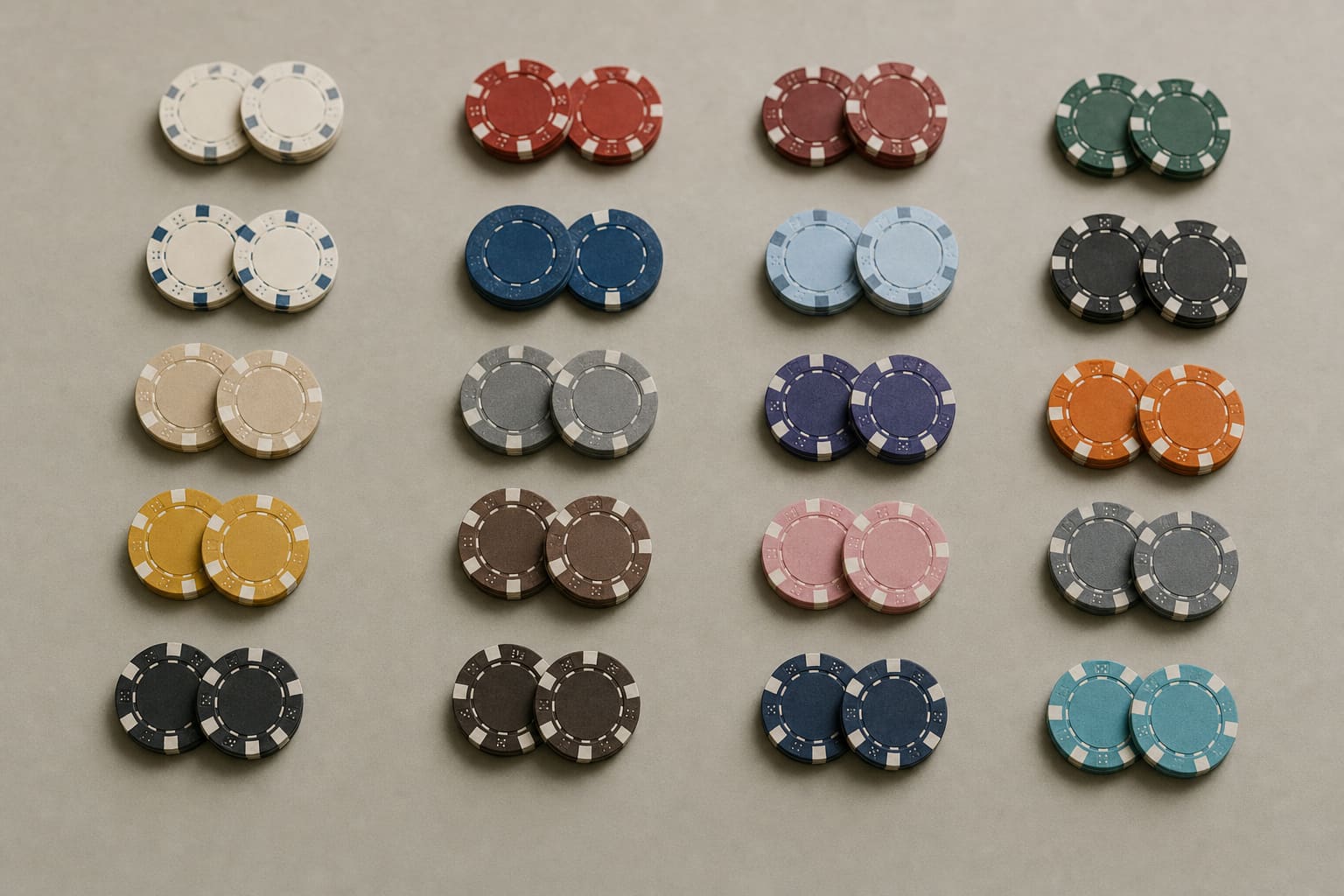
Negative, positive and flat — the three families
Almost every roulette betting system is a variation on one of three ideas. Negative progressions such as the Martingale, Grand Martingale and Fibonacci raise your stake after a loss, chasing a recovery that arrives right up until a streak outruns your bankroll or the table limit. Positive progressions such as the Paroli and the 1-3-2-6 do the opposite: they press only when winning, so a bad run costs little but a good run rarely repays a whole session. Flat betting stakes the same amount every spin and gives the slowest, most predictable loss rate of all.
The explorer tags every system by family and by risk level so you can compare like with like. Filter to the low-risk positive progressions if you want a system that stretches a small bankroll, or open the extreme-risk column to see exactly how fast a doubling system escalates before it breaks.
Why the maths matters more than the label
Systems are sold on stories — a clever staking pattern, a run that "can't lose". The explorer strips the story away and shows the mechanics: the exact stake sequence, the recovery condition, and what a realistic losing streak does to it. Read a few side by side and the pattern is unmistakable. Each one rearranges the same 2.70% edge into a different risk profile; none removes it. That is the honest use of a systems reference — not to find the winner, but to understand the trade-off you are choosing.
Common questions about the systems explorer
How many roulette systems does the explorer cover?
Thirty-two — every well-known staking method, each tagged by progression type (positive, negative or flat) and by risk level.
Do any of these systems beat the house edge?
None. Each one rearranges risk into a different shape; the 2.70% European house edge stays exactly where it is.
What is the difference between a positive and a negative progression?
A negative progression raises your stake after a loss, chasing a recovery; a positive progression raises it after a win, pressing a streak. The explorer tags every system so you can compare like with like.
Is the explorer free to use?
Yes — it runs in your browser with no sign-up, and the full system list stays readable even with JavaScript switched off.